


1. Embedding Calendar Invites in Webpages, Email, AI, and Apps using a REST API.
The 2,500 Major League Baseball games require precise coordination of dates, times, and venues, with constant updates.
It’s been our benchmark for testing the Calendar Invite Server Workflows for 3 years.
We load the data via an automated process using the Google or Outlook Calendar Clients talking to an ETL inbox on AWS.
The Calendar Clients are amazing CRUD engines.
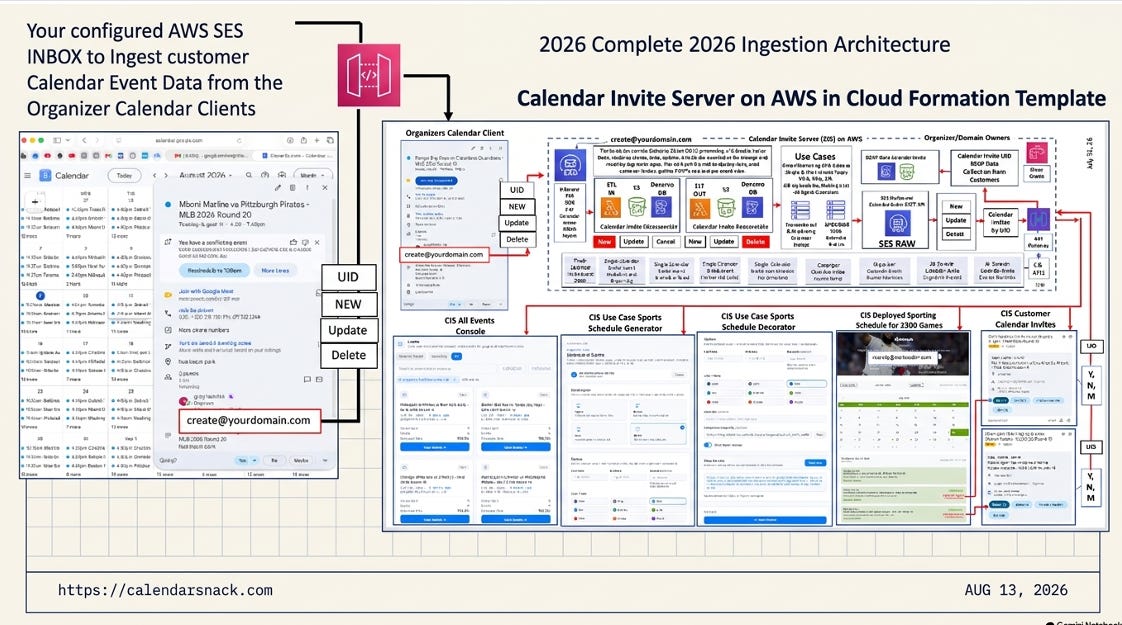
Calendar Client and Calendar Invite Server ETL MailBox provide the magic.
I uploaded the MLB schedule to my Google Calendar Client and forwarded all those events to the AWS SES Ingest box on the Calendar Invite Server for ingestion, storage, and retrieval.
How are we different from all the other solutions?
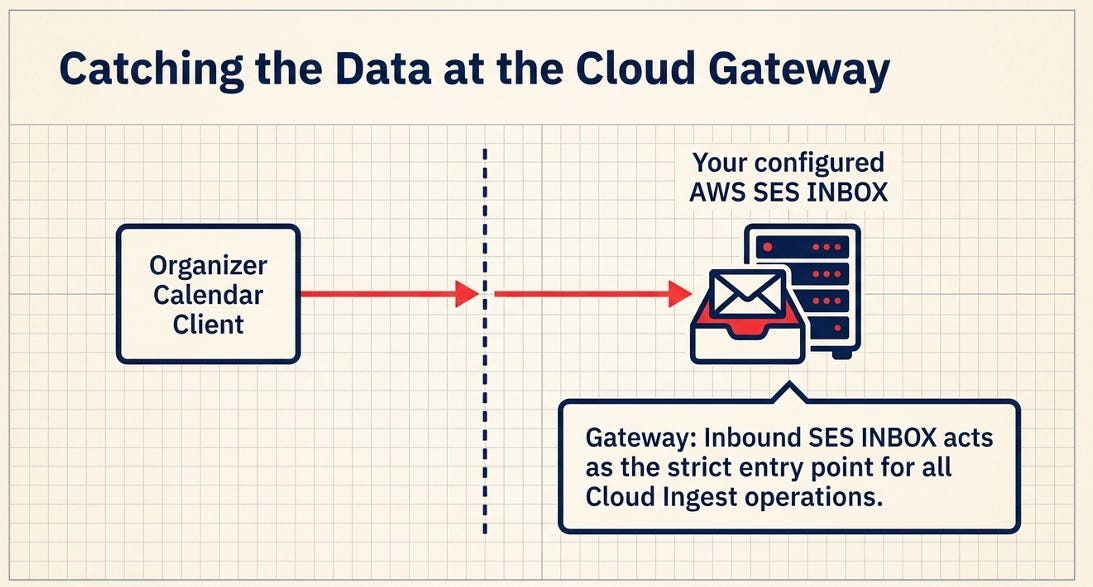
The Organizer sends new events, updates, or deletes to the Calendar Invite Server (CIS) using their calendar client, by using an email address configured in the Domain Owners’ AWS SES account.
This SES Box houses the ETL processing, storage, and workflows.
The REST APIs crunch calendar event data from the storage layer to display calendar events and send Calendar Invites, including collecting RSVPs for the Event UIDs using the API Gateway.
Think of the Calendar Client as the remote control for sending, updating, and deleting data for the events stored and displayed in the Calendar Invite Server.
This same data is used to generate reports, assemble calendar invites, and collect RSVPs when requested via the REST API for sending calendar invites in Web, Email, and Apps.
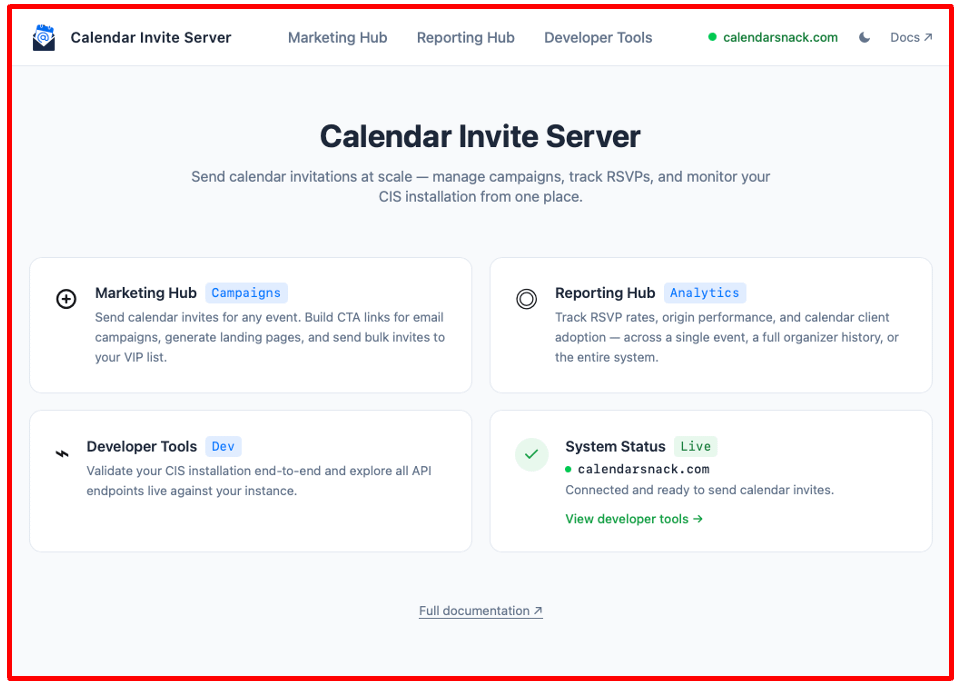
That data is available through our Calendar Invite Server Console for Organizers and Domain Users. This data is pulled by the 9 APIs.
2. Takeaway 1: Your SES Inbox is the Most Powerful API You Aren’t Using
The architecture of the Calendar Invite Server (CIS) begins with a “front door”: a configured AWS Simple Email Service (SES) inbox, such as create@yourdomain.com.
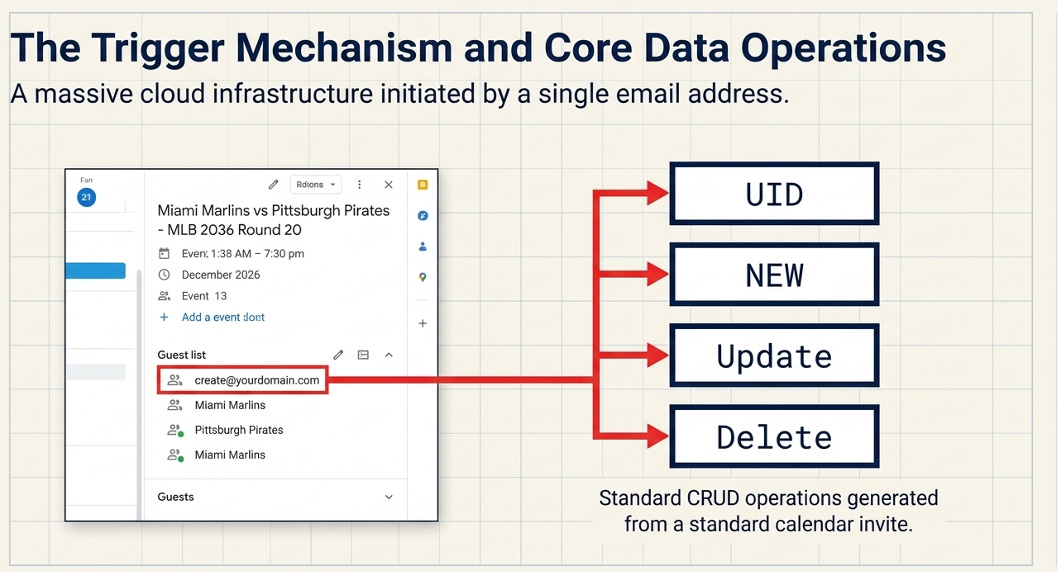
By using SES to ingest data, the system bypasses the need for complex, proprietary OAuth integrations with Google, Apple, or Microsoft.
When an organizer adds this email address as an attendee, the calendar client sends the event data—including the UID (Unique Identifier)—directly into the Calendar Invite Server, creating a sticky layer for editing, updating, deleting, and saving that event data without requiring a custom-built UI.

The access can be controlled by a number of security parameters such as “authorized” users via the SES Identity center or routing users to an Authorization and Authenication layer.
3. Takeaway 2: The “Disassemble and Reassemble” Logic of Serverless Architecture
Once the calendar data hits the SES entry point, the system employs a modular “Disassemble and Reassemble” logic using AWS Lambda.
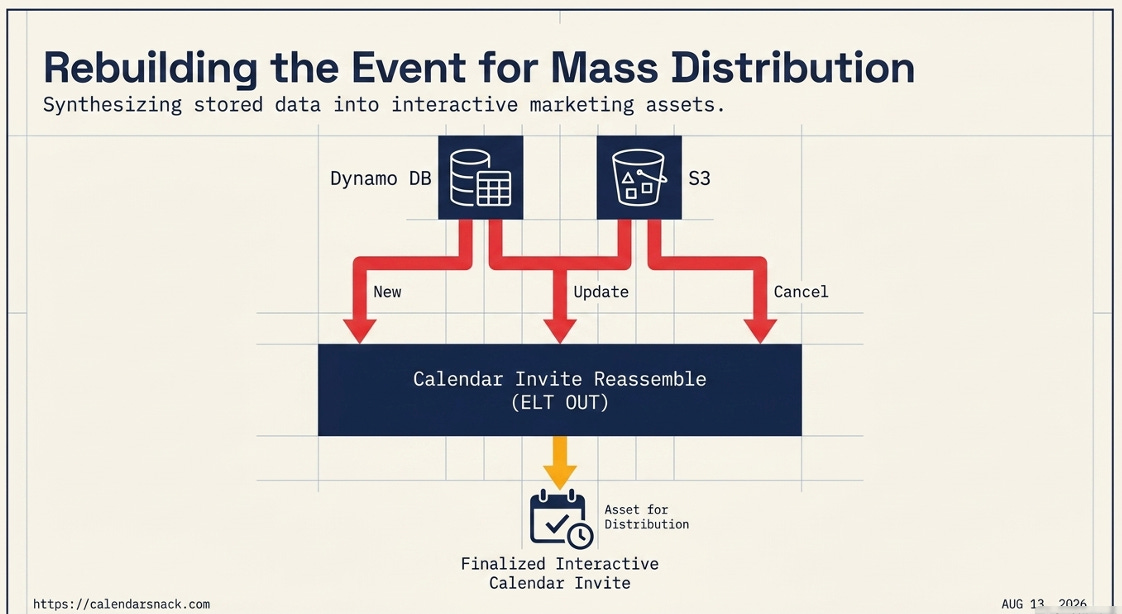
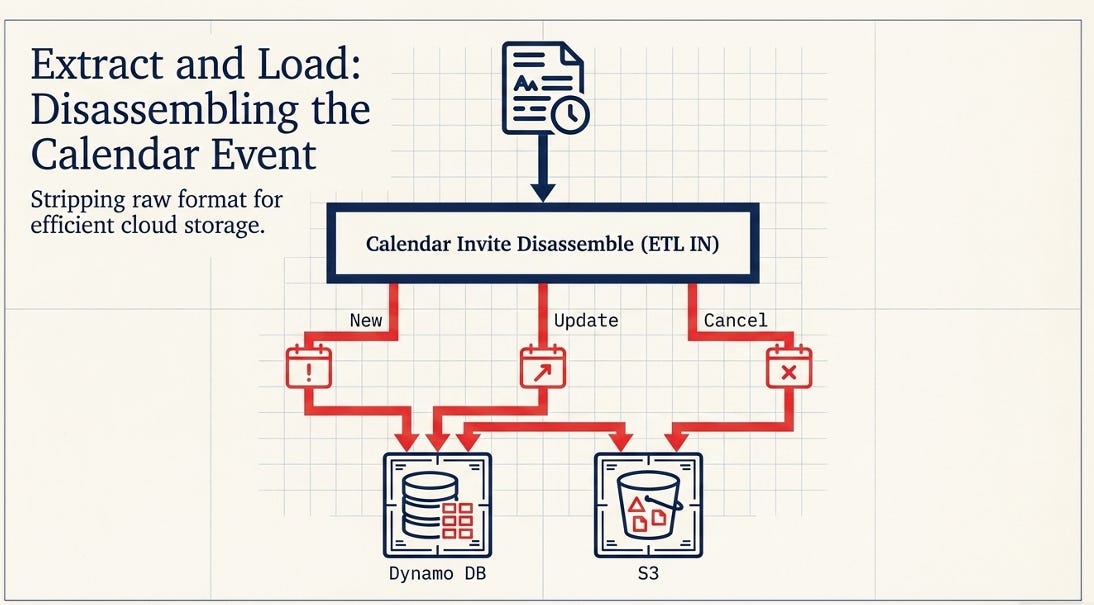
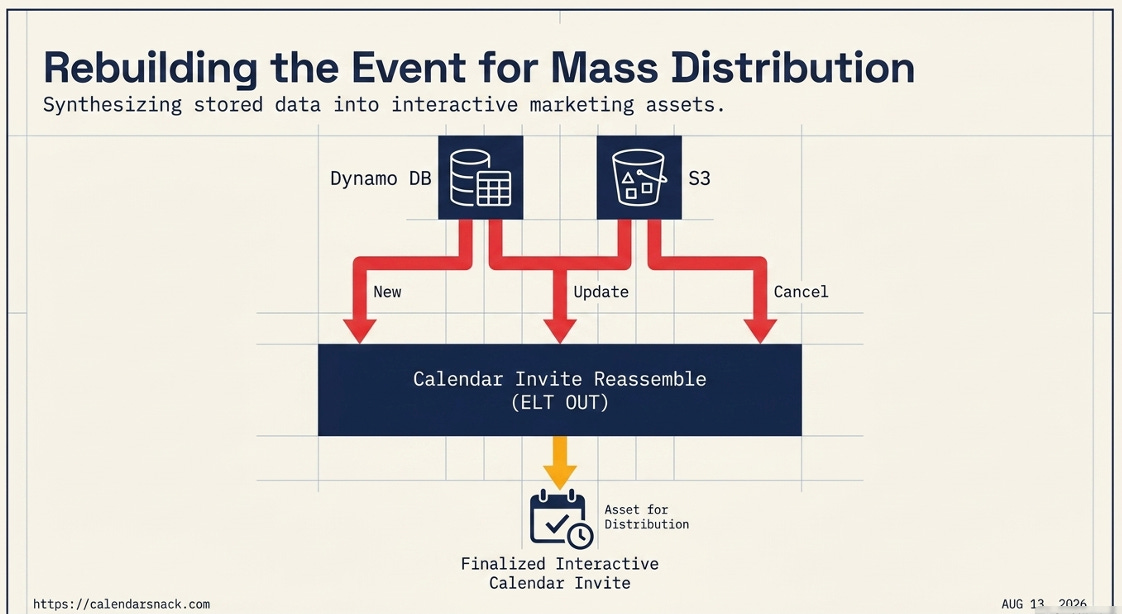
This is the ETL (Extract, Transform, Load) and ELT (Extract, Load, Transform) pipeline designed for high data integrity.
Calendar Invite Disassemble (ETL IN): A Lambda function strips the incoming
.icsfile into its raw components and stores them in AWS S3 and DynamoDB. This turns an unstructured email attachment into structured, searchable data.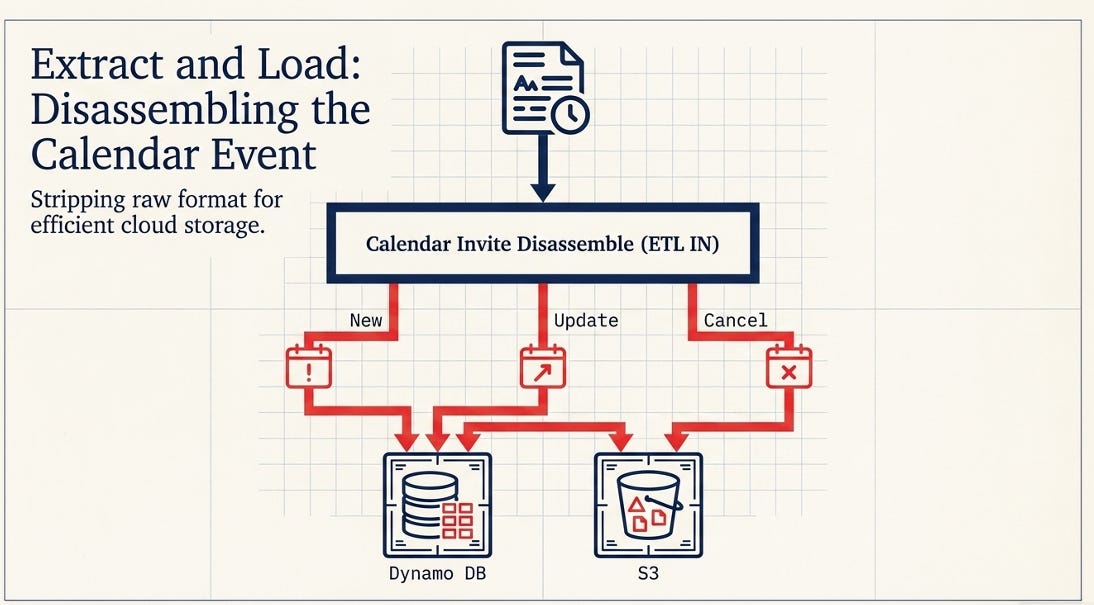
Calendar Invite Reassemble (ELT OUT): A secondary Lambda reassembles this data for outbound calendar invite delivery to an email address using the “SES RAW” engine and requests the RSVP (Y,N,M) participation that is collected back to the API gateway. This is the short version of how the “embedded” calendar Invite REST API works in Email, Web, Apps and AI.
This modularity ensures that the data is cleaned and validated upon entry and can be dynamically reconstructed for any outbound use case, keeping the entire pipeline stateless and highly resilient.
4. Takeaway 3: Scaling to 2,500 Games Without Breaking a Sweat
The CIS architecture is specifically built to handle the sheer volume of a 2,500-game MLB season in an Auto-Generated Schedule and Page decorator.
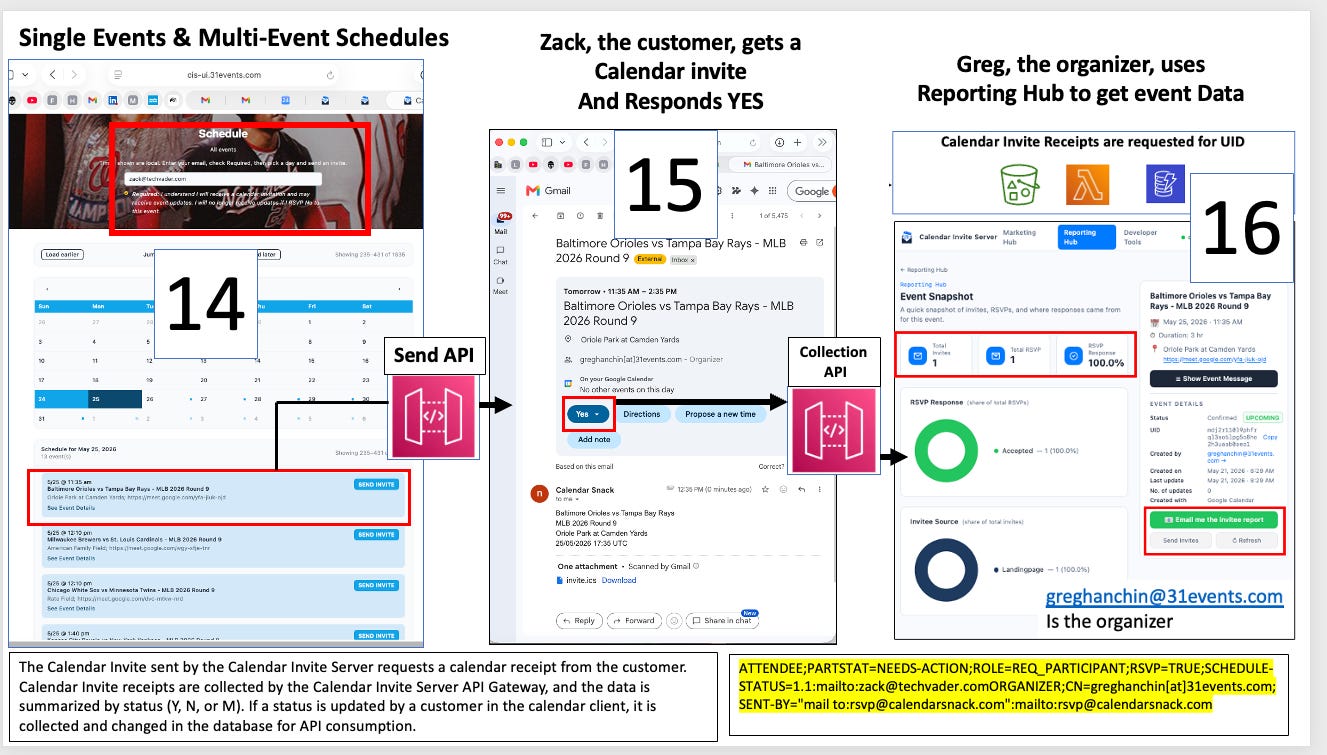
To manage this volume, the “All Events Console” serves as a single pane of glass for Organizers and Domain Owners to view the status of every game UID and customer RSVP response.
5. Takeaway Wrap up : The Calendar Invite Server as a Marketing Powerhouse
By tracking “Customer Calendar Invites” via their unique IDs, the system captures granular RSVP Data Collection—specifically tracking Y, N, M (Yes, No, Maybe) statuses in real time when using one of the 4 REST API embedding methods.
These are automatically generated as Embedded Calendar Invite codes in 1 of 4 ways.
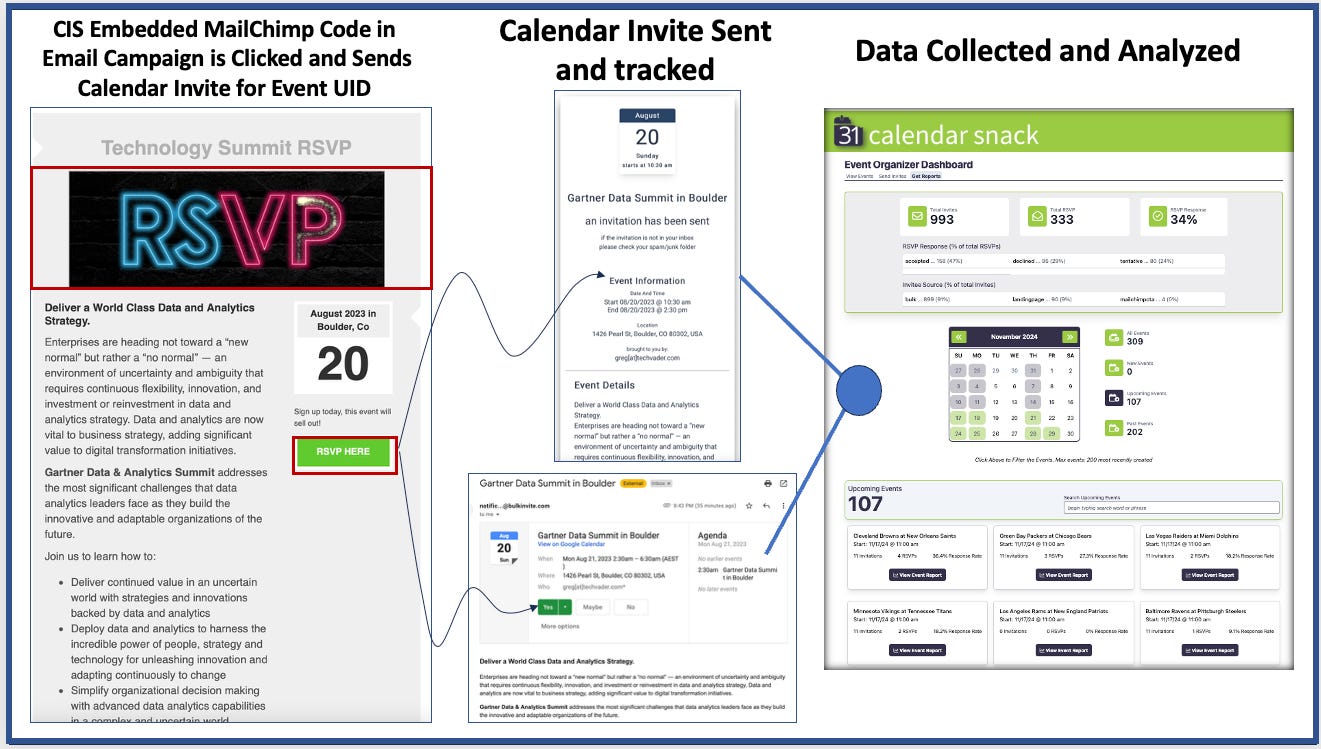
Embedded Calendar Invites for Email Marketing Templates: The CTA buttons in the Email Templates use the CIS code generated for that UID to embed and send a calendar invite to track RSVPs when the CTA button is clicked in a MailChimp, SendGrid, or Klaviyo, HubSpot template.
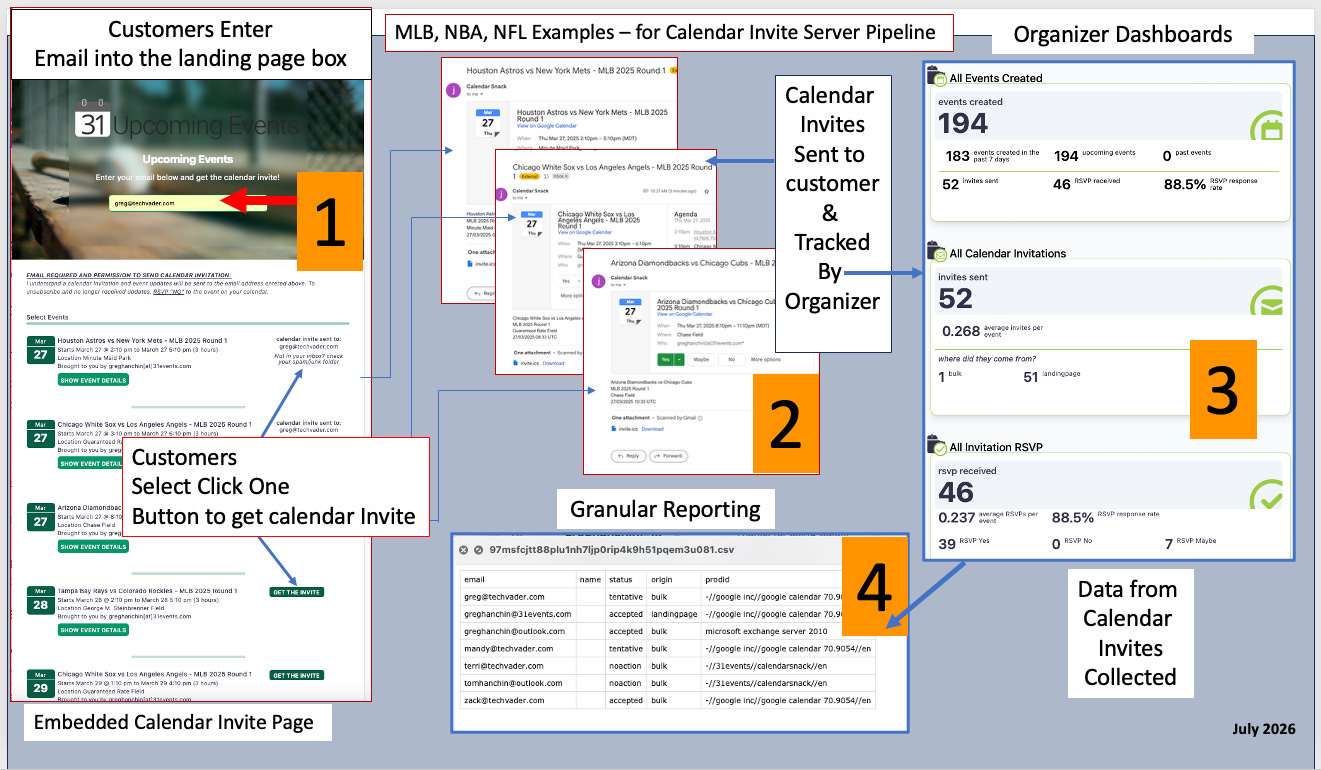
Single & Multi-Event Pages: Web-based landing pages for individual games or entire team schedules with auto-inserted email box and REST API to match the sending of a calendar invite to an email address.
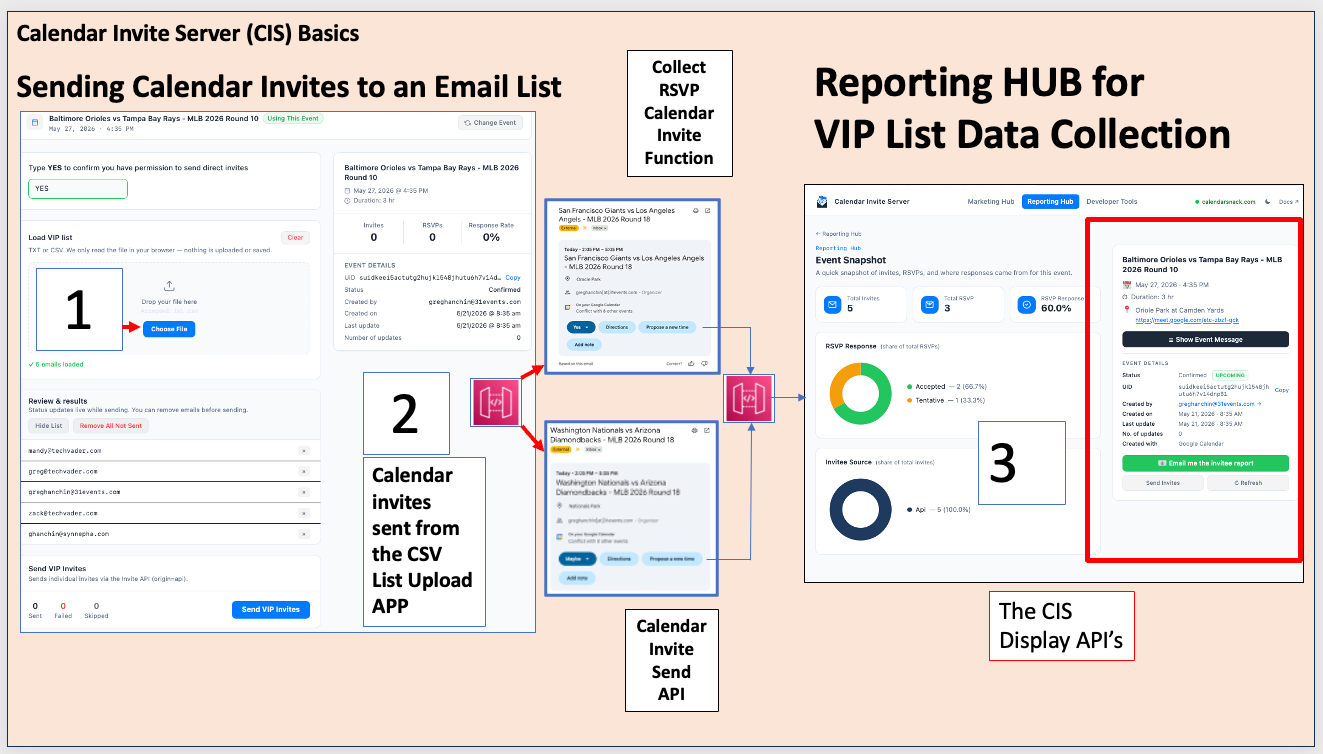
Directly send Calendar Invites to an Email List: Using our App that ships with the CIS console, select an event in the picker, upload your email list, and click one button to send the calendar invite to up to 10K recipients at a time.
AI Interface like Open GPT: Using a chat interface to request specific games from the CIS MCP server, presenting them for selection, and providing an inbox to receive the calendar invite for tracking RSVPs via the 1 Click interface in Anthropic chat.
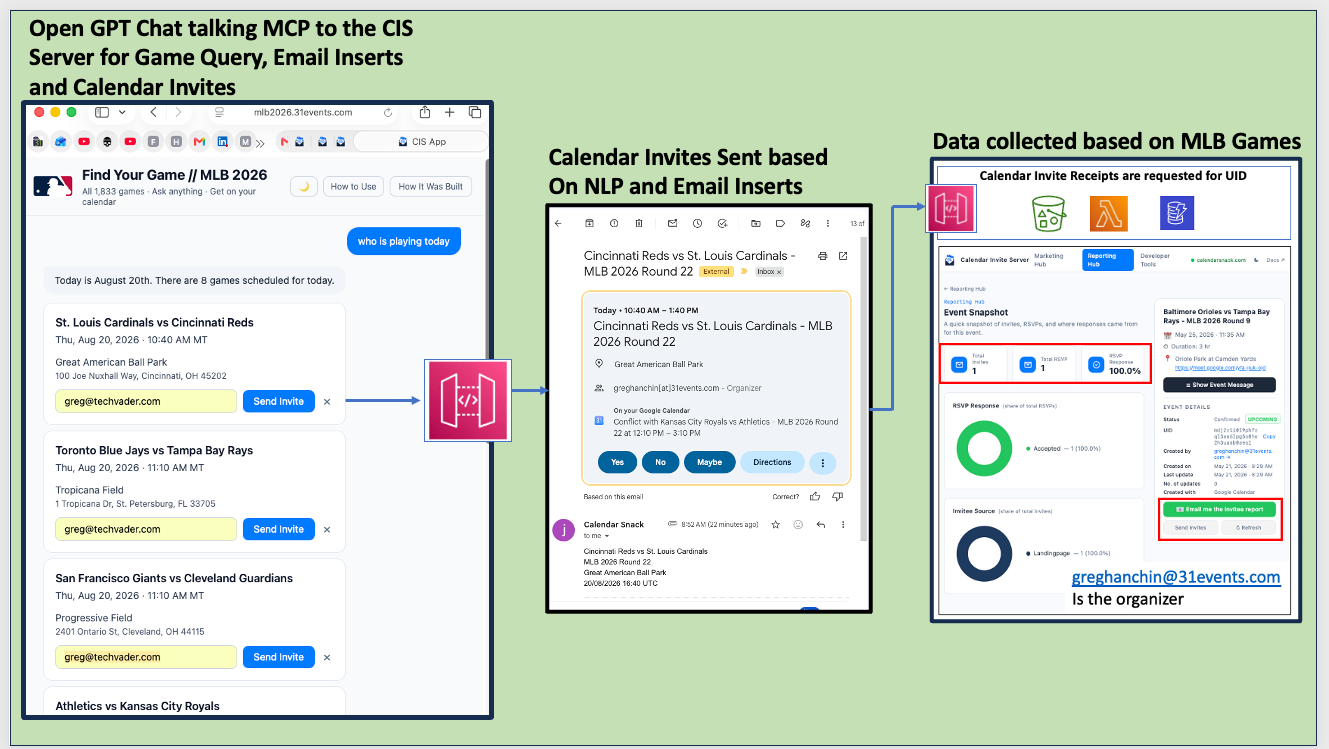
Takeaway 5: Automation via CloudFormation into your AWS account
The entire Calendar Invite Server is deployed using a CloudFormation Template. The template handles installing the ZIP file on your laptop and deploying it to your AWS account in less than 30 minutes.
7. Conclusion: The Future of Calendar Invite Embedding across the web
The most effective way to manage massive data sets is to meet users where they already live—in their calendar clients.
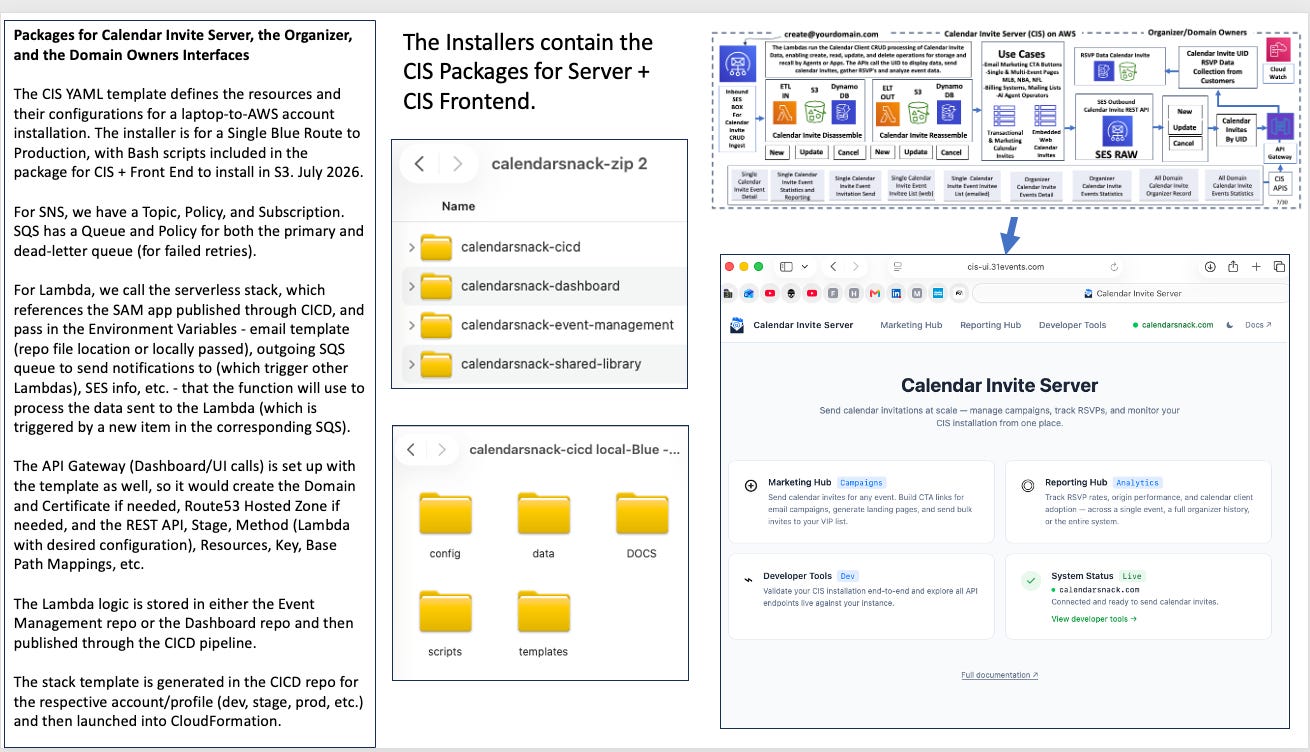
The Calendar Invite Server proves that by utilizing an AWS SES inbox API as an ETL processing center we can store the event data for embedding and sending calendar invite in web, email, app and AI Chats and gather live RSVP data and update the EVENT informations as needed with the Calendar Client.
See https://31events.com for more.


