


Ingesting MLB Game Data for 2400 Games
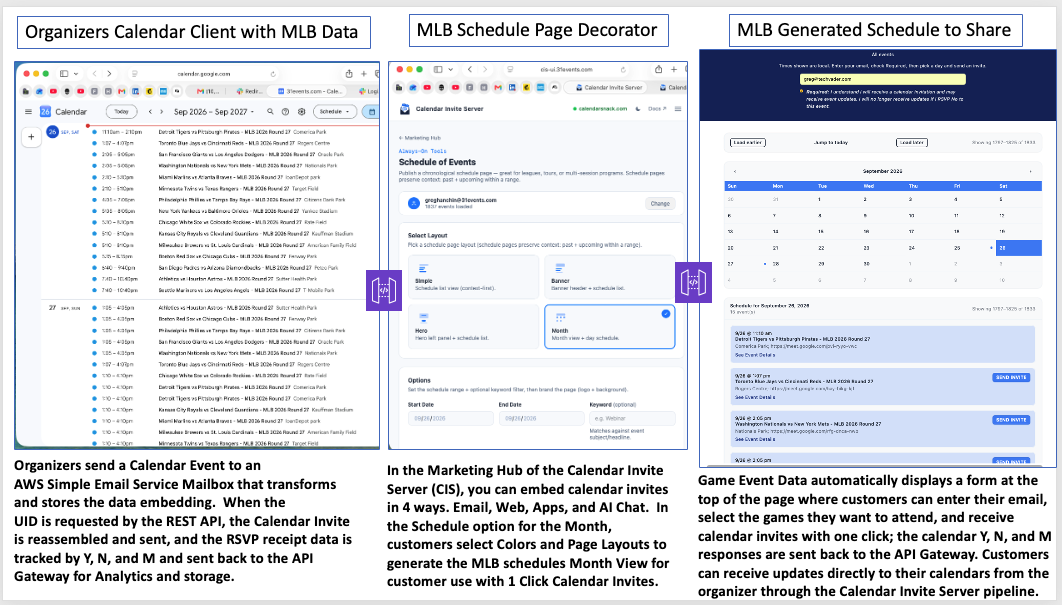
Calendar Event Data is sent to an AWS SES box configured to ETL calendar invites from any Google or Outlook Client by an Organizer.
That data is stored in a DB for the Display APIs to recall to drive interfaces, for the REST API to send a calendar invite by UID from Email, Web, and apps, and to collect RSVP data for each event back to an API Gateway for customer analytics.
As we analyze the technical architecture and strategic impact of automated event pipelines, four takeaways emerge that will redefine how organizers approach attendee engagement and operational efficiency.
Why One-Calendar Click Calendar Invites are better
Traditional RSVPs often demand a multi-step journey: clicking a link, navigating a landing page, filling out a form, and finally performing a manual “Add to Calendar” action. The CIS architecture collapses this journey into a single point of interaction.
By utilizing an embedded API, organizers can deploy calendar invites across four primary channels: Email, Web, Apps, and AI Chat.
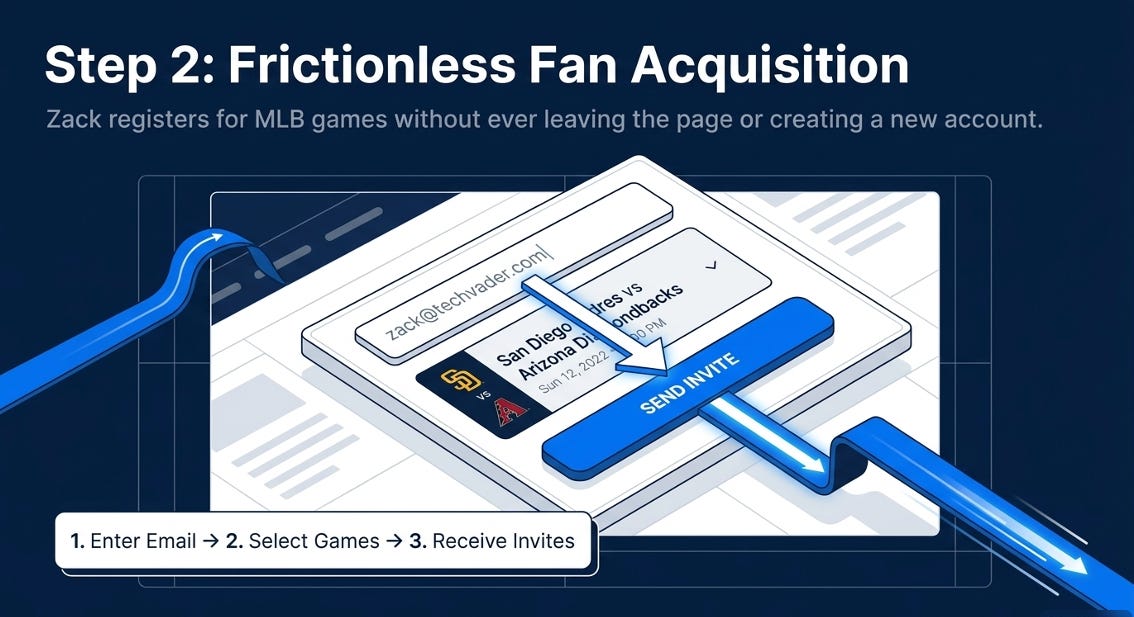
Consider the user journey of a fan, Zack. When Zack encounters a schedule page, he isn’t forced to create a new account or navigate a complex portal. Instead, he sees a streamlined interface that prioritizes trust through clear, permission-based marketing.
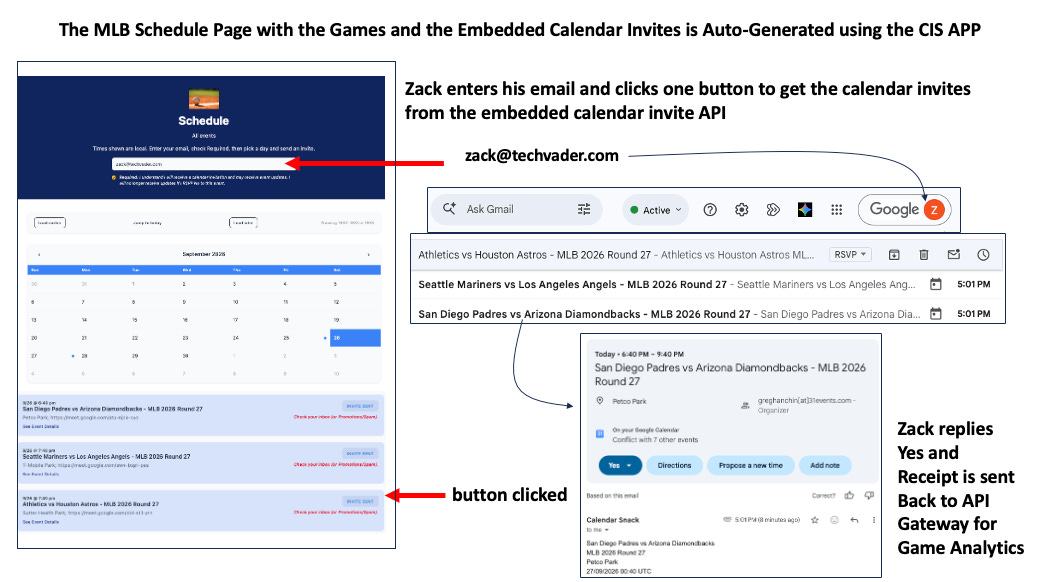
“Zack enters his email and clicks one button to get the calendar invites from the embedded calendar invite API.”
This “one-click” commitment is a psychological victory; it secures a place in the user’s most private digital space—their schedule—while reassembling the invite via a REST API through a dedicated CIS pipeline.
The “Living” Invite: Real-Time Marketing Inside the Calendar
Traditional calendar invites are static artifacts that often become obsolete the moment they are sent. Modern event architecture, however, introduces “The Living Invite.” In this model, the calendar entry is a dynamic marketing asset that remains connected to the organizer’s database long after delivery.
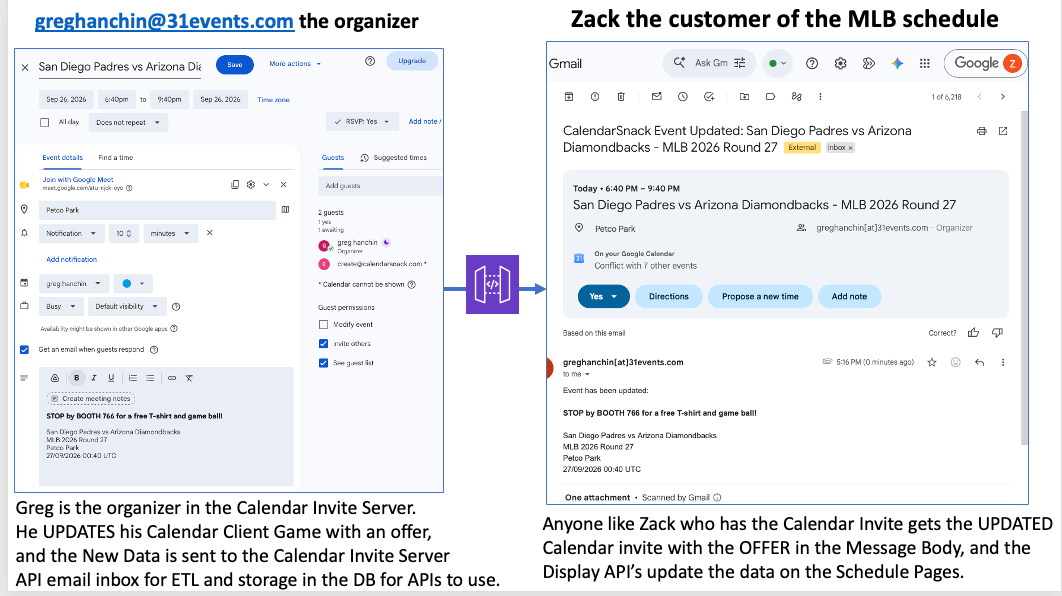
Through the CIS pipeline, an organizer like Greg (greghanchin@31events.com) can update a specific game—such as a San Diego Padres vs. Arizona Diamondbacks matchup—with real-time promotional data. If a new sponsorship or game-day offer arises, Greg simply updates the event.
The system pushes this new data directly into the message body of Zack’s existing calendar entry. For example, Zack’s invite might suddenly reflect a new call to action: “STOP by BOOTH 766 for a free T-shirt and game ball!”
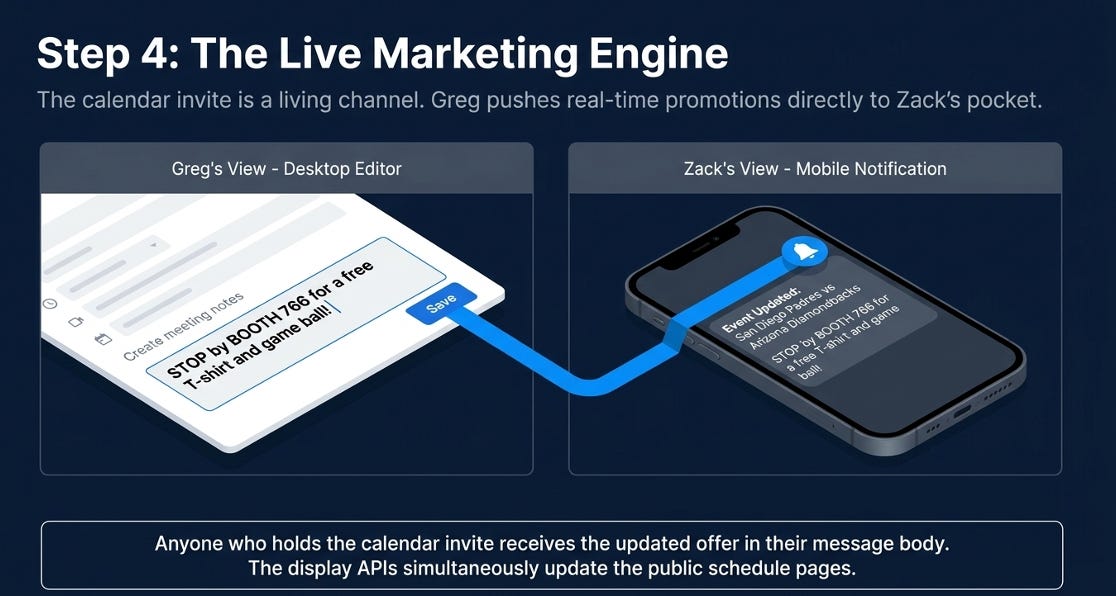
Because these updates are pushed automatically through the API, the calendar entry evolves from a simple reminder into a persistent, high-value marketing channel. This allows organizers to bypass the noise of the inbox and speak to the fan directly within the interface they use to manage their entire day.
Deep Data: Tracking the Y, N, and M
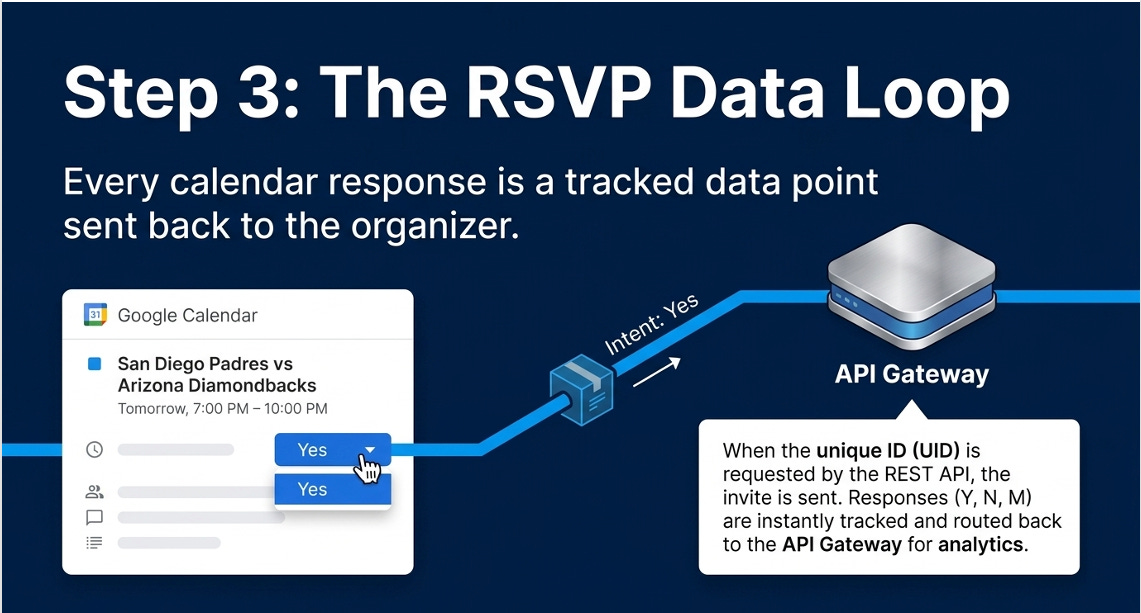
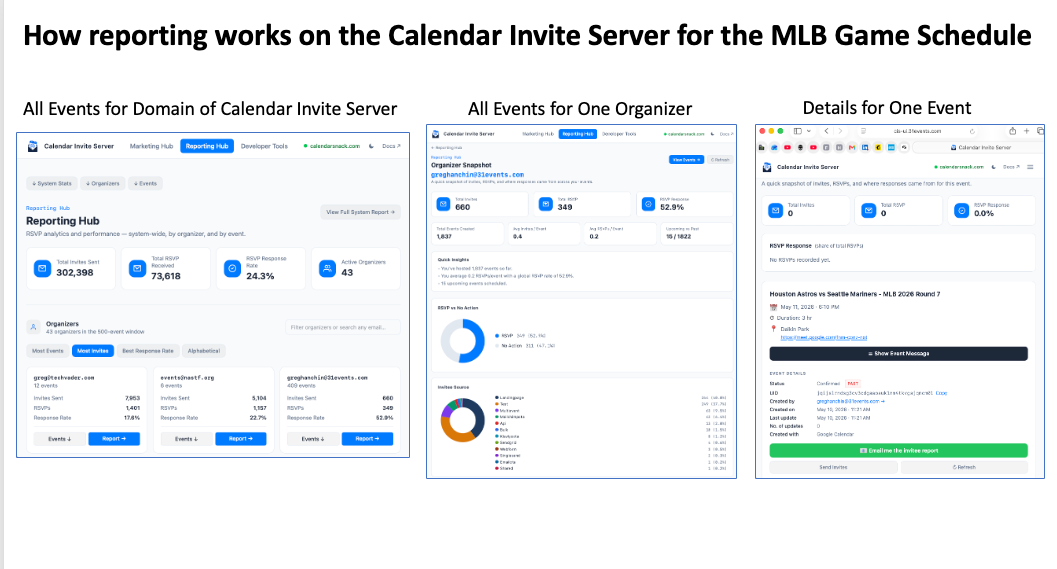
While traditional marketing focuses on opens and clicks, the Calendar Invite Server tracks actual intent by monitoring “Yes,” “No,” and “Maybe” (Y, N, and M) responses at the API Gateway. This provides a granular level of insight that email metrics cannot match. By analyzing system-wide data, we see the scale at which this intent is being captured:
Total Invites Sent: 302,398
Total RSVP Received: 73,618
Global RSVP Response Rate: 24.3%
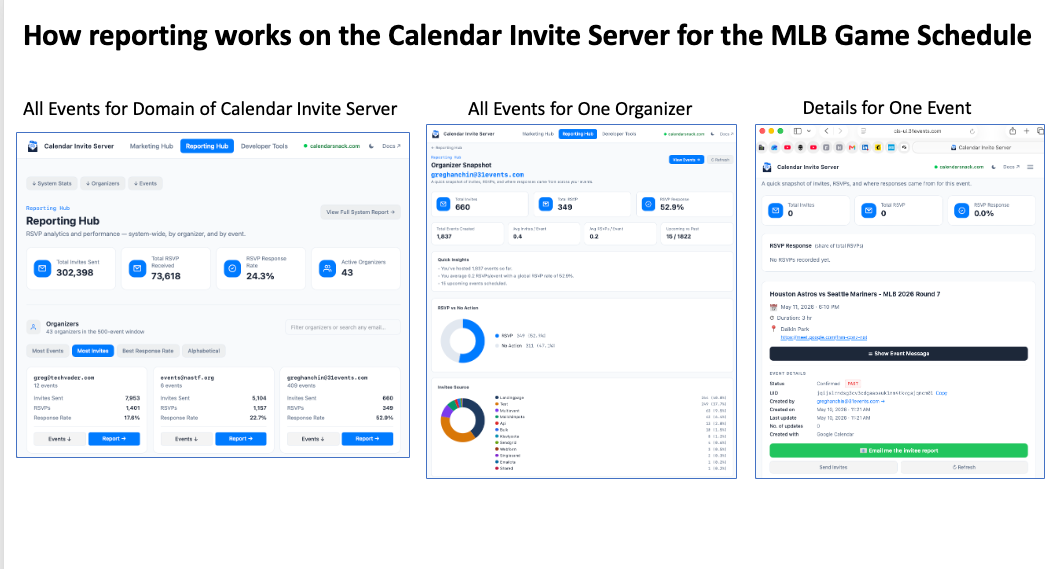
However, a sophisticated strategist looks deeper than global totals. The Reporting Hub allows organizers to view an “Invitee Source” breakdown, revealing exactly which marketing channels are driving commitments. For instance, data shows that the “Landingpage” often accounts for the lion’s share of engagement (e.g., 40.0%), followed by “Test” (37.7%) and “Mailchimpcta” (6.4%). By tracking Y, N, and M responses against these specific sources, organizers can finally determine which part of their tech stack is delivering the highest ROI for actual attendance.
The Engine Under the Hood: AWS Simple Email Service Integration
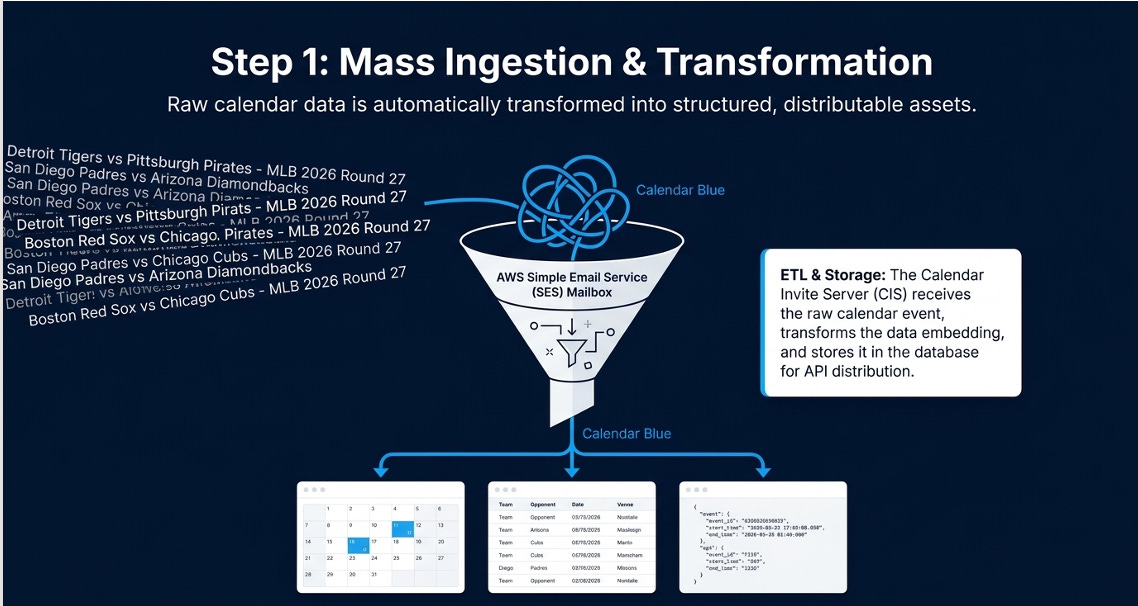
The seamless experience for the fan is the result of a highly automated, “invisible” architecture designed for massive scale. The technical flow begins when an organizer sends a calendar event to an AWS Simple Email Service (SES) Mailbox. This is not merely a storage point; it is the entry for a critical ETL (Extract, Transform, Load) process.
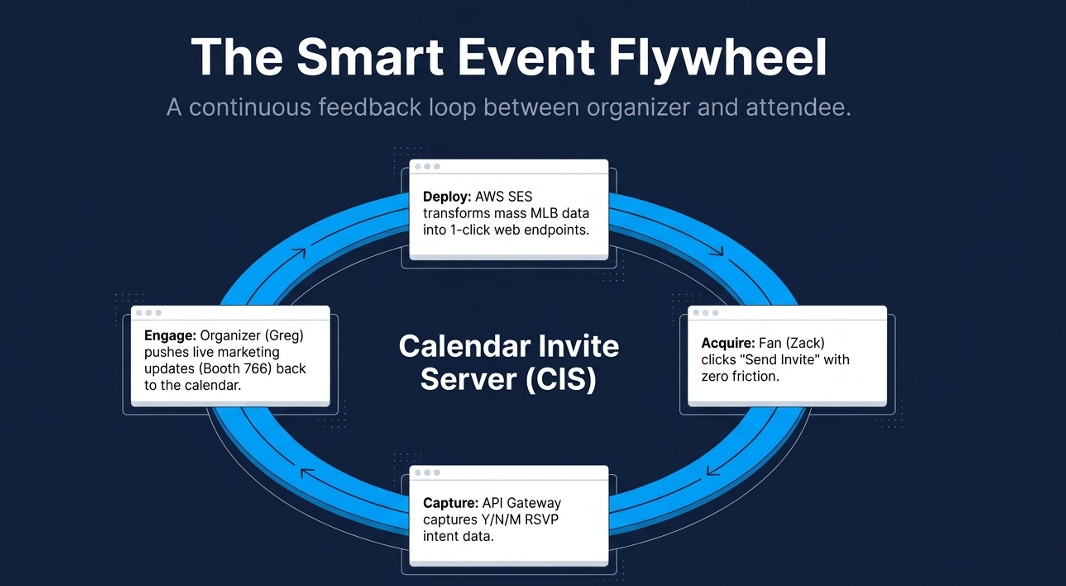
The system extracts the event data from the email, transforms it into a structured format, and stores it in the database for the API to access.
When a fan like Zack requests an invite, the REST API reassembles that data and delivers it to his device. Every subsequent interaction flows back to the API Gateway for storage and analytics. This level of automation is what enables incredible operational efficiency; a single organizer in this system can manage as many as 1,837 individual events, each with its own dynamic tracking, without the need for manual oversight.
The Forward-Looking Summary
By moving the point of commitment from an external registration site directly into the user’s personal schedule, organizers are meeting fans where they live. This approach doesn’t just remind fans about an event; it integrates the event into their daily routine, supported by an invisible architecture of AWS-driven automation and real-time data updates.
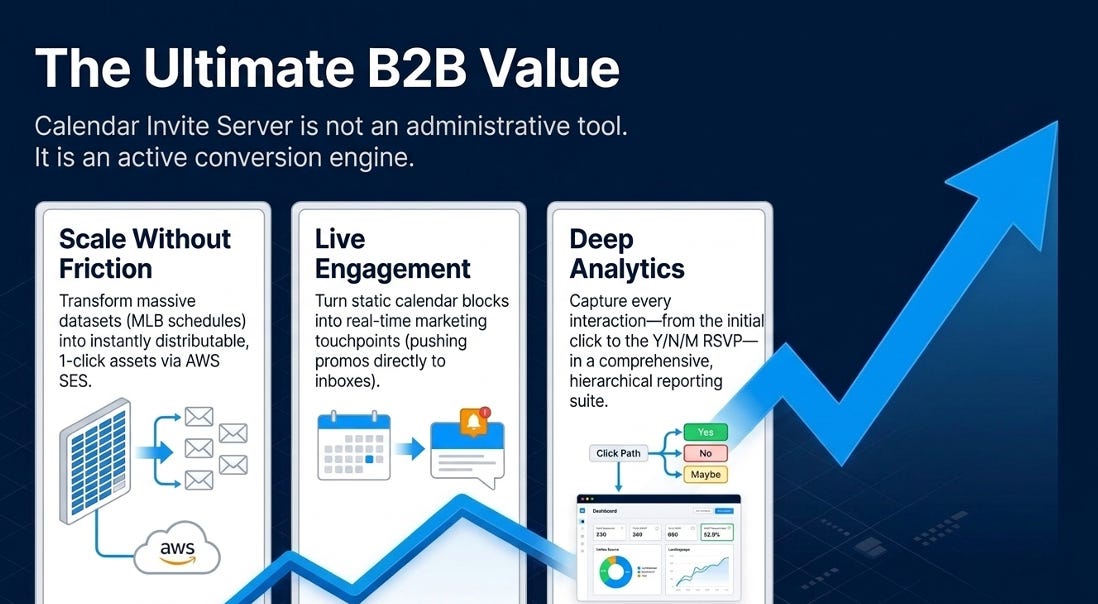
As event designers continue to prioritize frictionless entry and deep-intent analytics, the traditional “reminder email” is beginning to look like a relic of a less efficient age.


