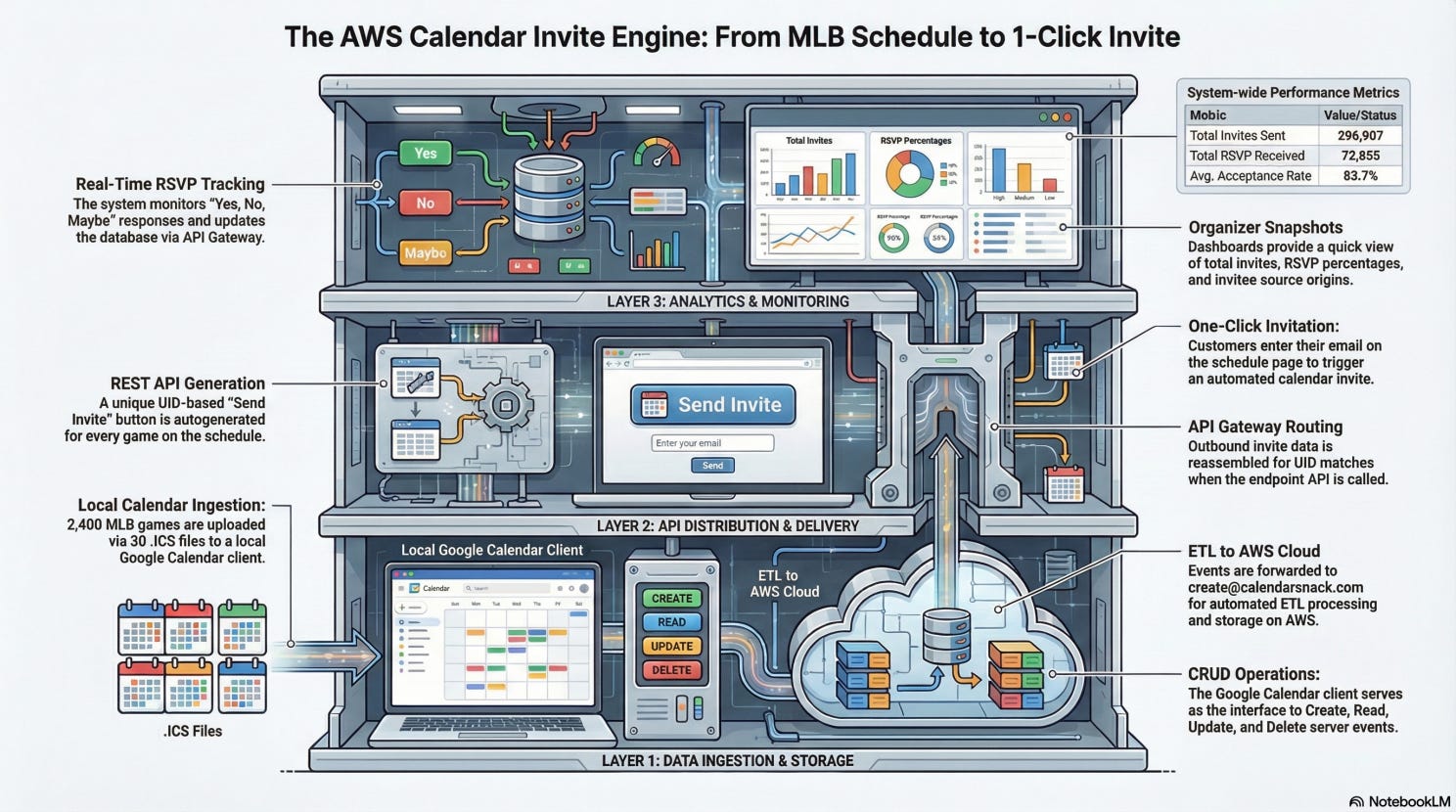

The secret? Turn your regular Google Calendar into an AWS pipeline with the Calendar Invite Server.
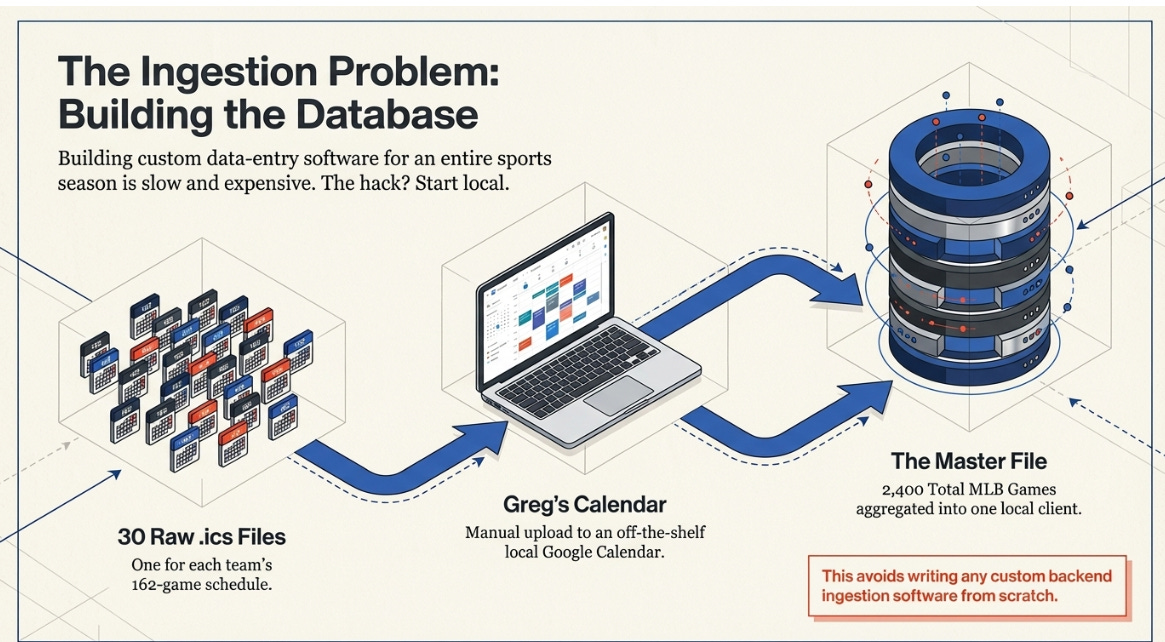
1. Your Calendar Client is a Database in Disguise.
From 30 Files to 2,400 Interactive Events
Scaling a digital experience for a project as vast as the 2026 MLB season requires a sophisticated approach to ETL (Extract, Transform, Load).
We began with 30 individual .ICS files—each a siloed 162-game schedule—and aimed to transform the first 2,400 games of the cycle into a dynamic master database.
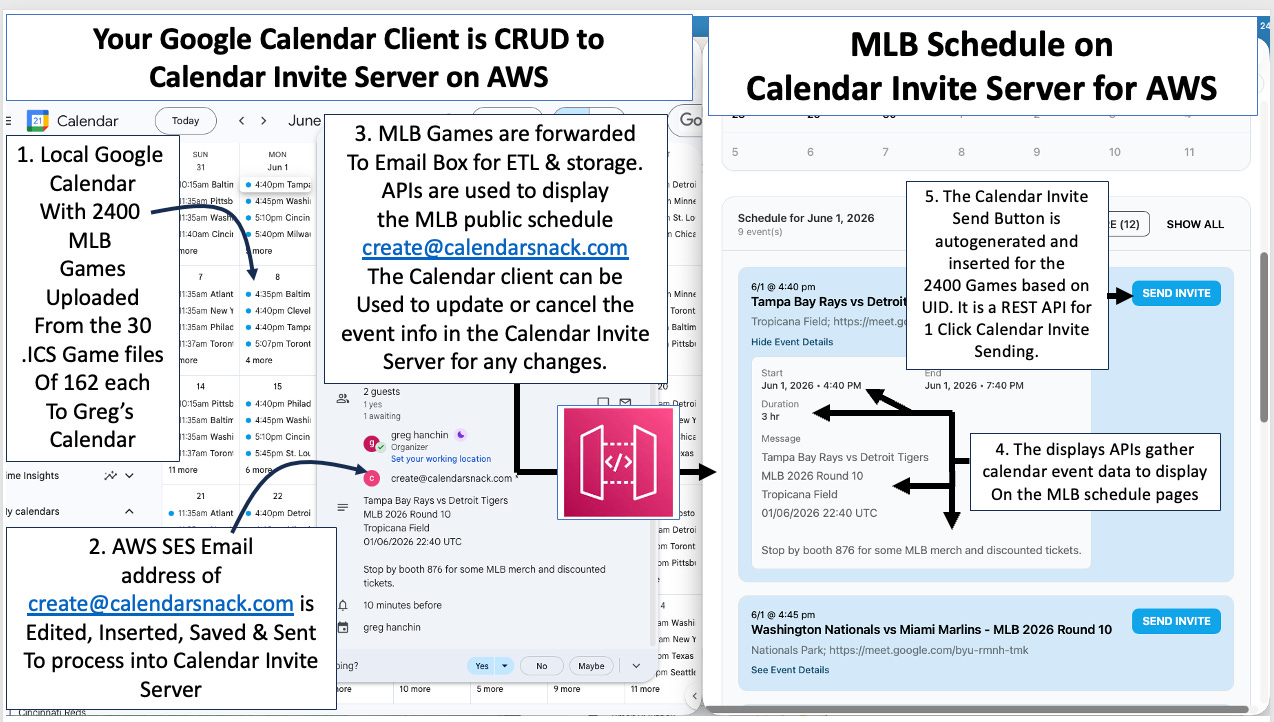
The architectural secret sauce?
A fascinating quirk where games are forwarded to a dedicated Email Box for ETL & storage. By sending these events to create@calendarsnack.com, the system extracts game data from a local Google or Outlook Calendar and loads it into an AWS pipeline. This process is run by an AI operator.
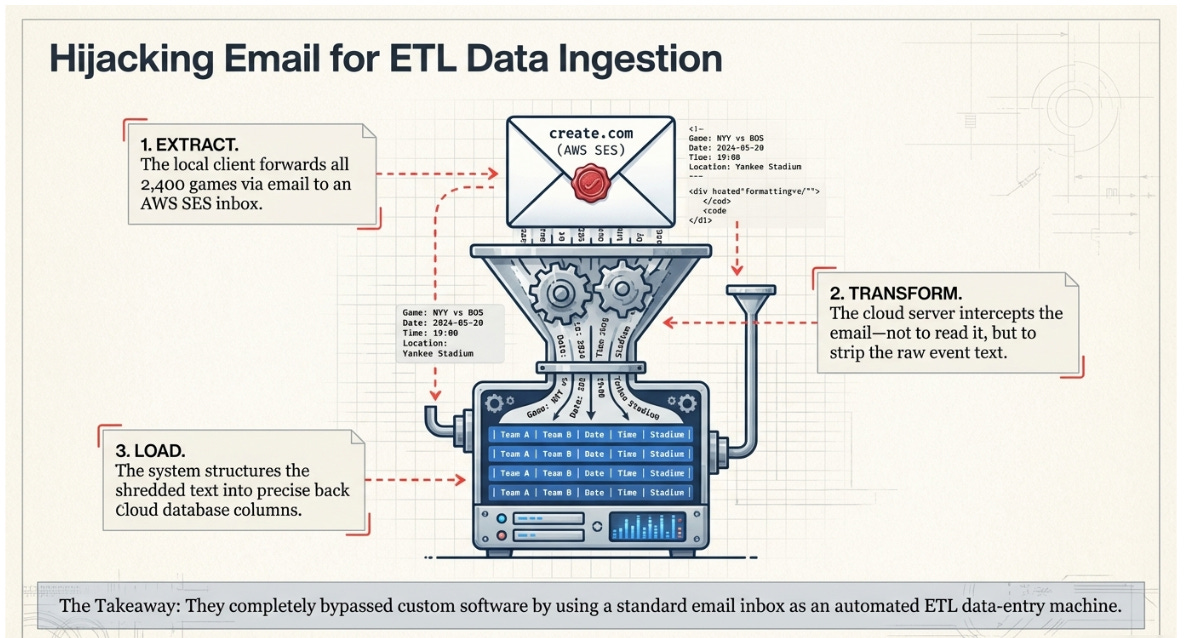
It houses the initial schema—game titles, dates, and times—that is waiting for ingestion. This approach treats the local client as a familiar, low-friction entry point for massive datasets, turning a simple interface into a powerful administrative staging area.
2. The Magic of the “1-Click” RSVP
The holy grail of digital marketing is the removal of friction.
Consider “Mandy,” a fan who just wants to stay updated. She doesn’t want to hunt through her inbox or manually type “1:10 PM vs. Yankees” into her phone.
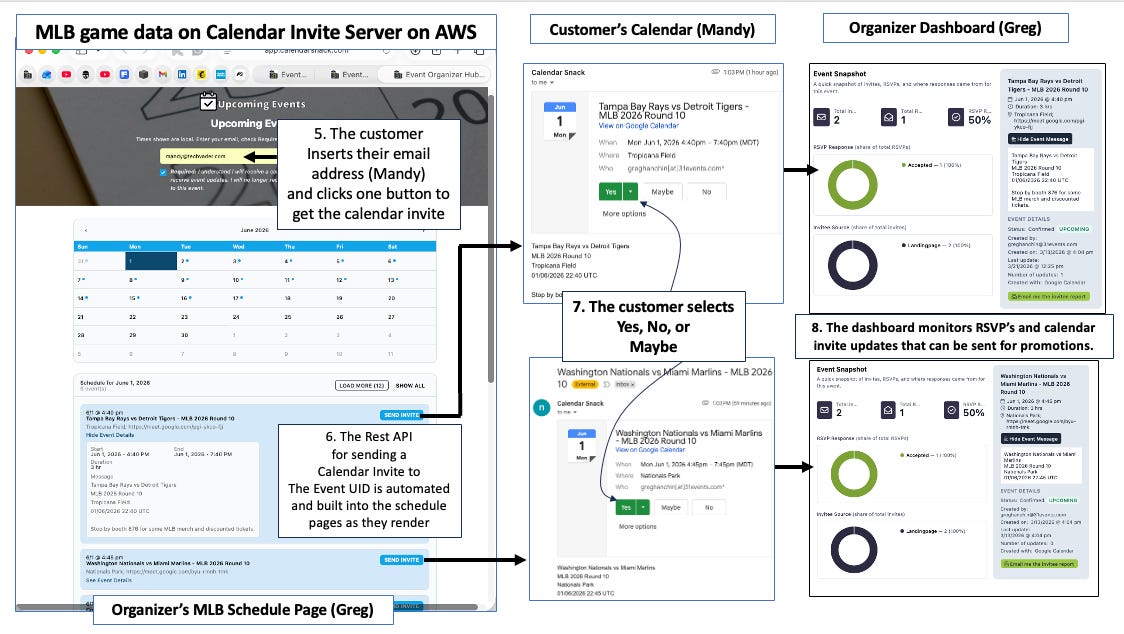
She finds the MLB game, enters her email at the top of the page, and clicks one button to have the calendar invite sent to her.
See the MLB with calendar invites built in here -https://tinyurl.com/89av6nxf
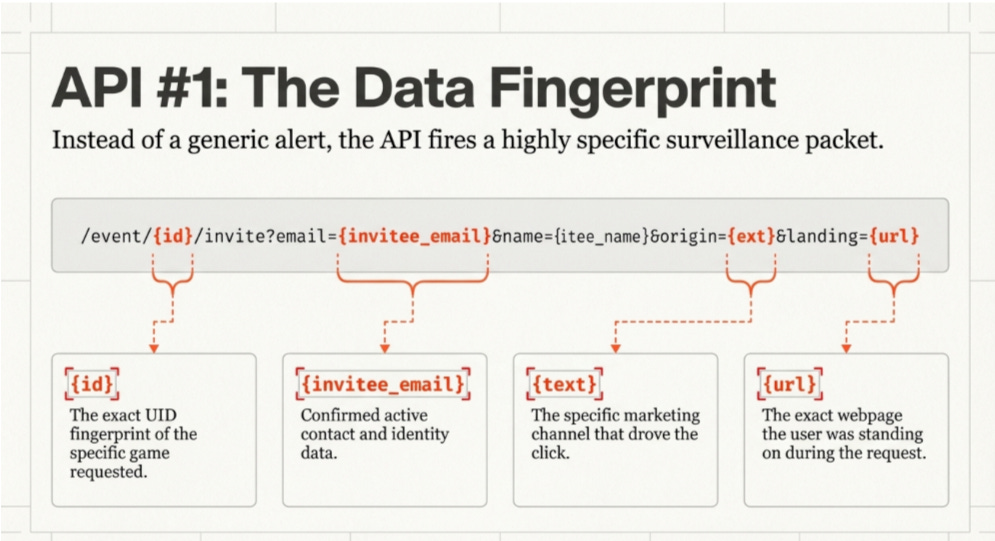
Behind the “Send Invite” button on the schedule page sits a powerful REST API.
Specifically, API #1 reassembles outbound calendar data on-demand the moment the endpoint is called: /event/[uid]/invite?email=[invitee email]&name=[invitee name]&origin=[text]&landing=[url]
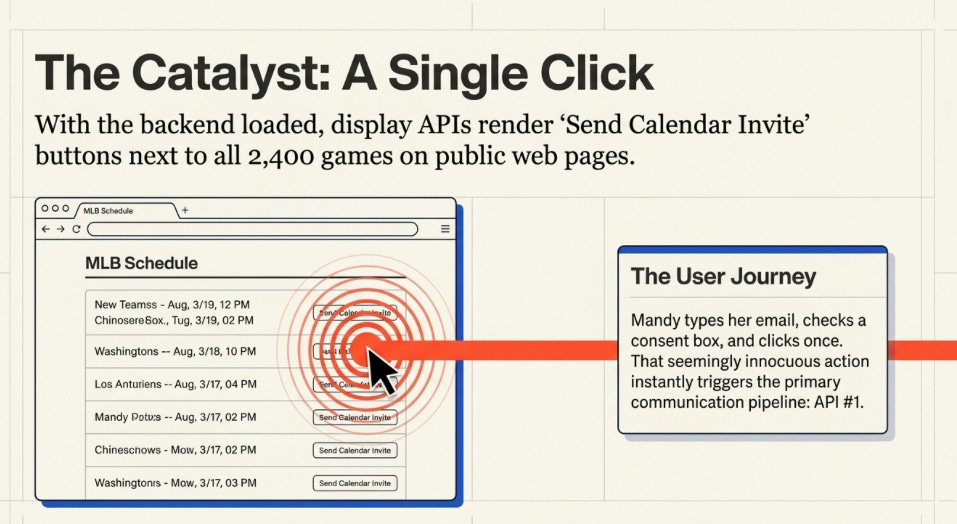
By leveraging a Unique Identifier (UID), the system reassembles the specific game data and fires a personalized invitation instantly.
This 1-click experience moves the event directly into the user’s personal life, transforming the calendar into a high-priority communication channel.
3.The AWS Engine: CRUD to the Cloud
The technical backbone of this transformation is a robust AWS stack. Utilizing SES for delivery, API Gateway for request handling, and Lambda for serverless processing, the system manages CRUD (Create, Read, Update, Delete) operations for thousands of invites simultaneously.
The most compelling aspect of this architecture is the “Remote Control” capability.
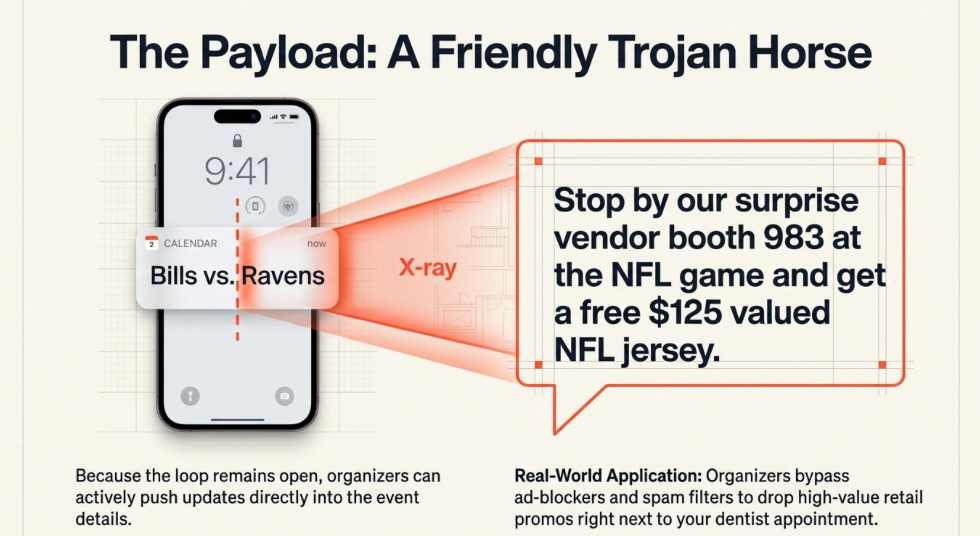
Because the server is synced to the organizer’s calendar, Greg (the organizer) can update a game time or location directly in his native Google Calendar workflow as CRUD.
The AWS backend detects the change and automatically pushes updates to the API content of the schedules and every fan who has the calendar invite with an updated one to thier inbox.
4.Data Collection of all RSVP’s from each Calendar Invite sent for each game from the schedule pages
NERD ALERT - This digital “handshake” is governed by a precise command string: ATTENDEE;PARTSTAT=NEEDS-ACTION;ROLE=REQ_PARTICIPANT;RSVP=TRUE;SCHEDULE-STATUS=1.1;SENT-BY=”mailto:rsvp@calendarsnack.com”
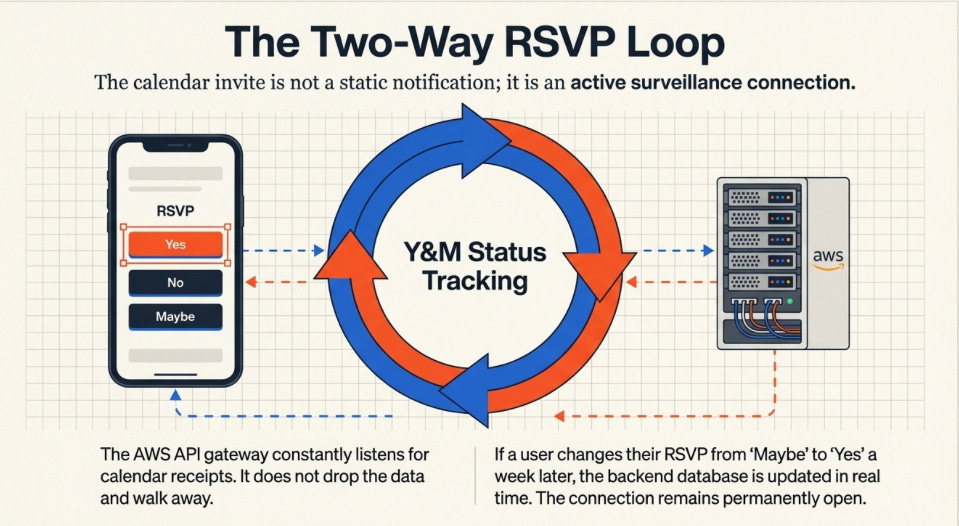
This insures the calendar client data from your customer is collected and sent back for every event.
5.Turning RSVPs into Actionable Intelligence
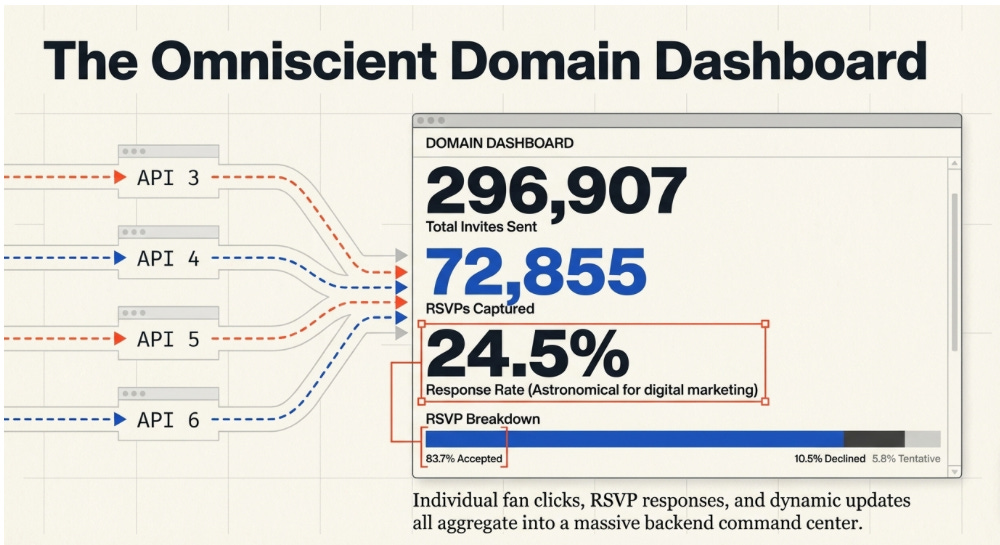
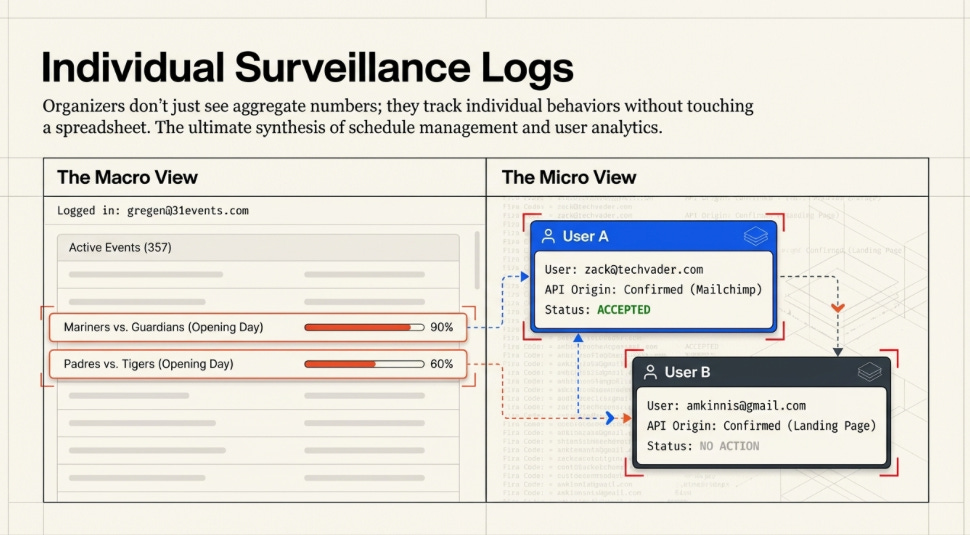
In the world of standard email marketing, “Open Rates” are a vanity metric. In the world of Calendar Invite Server, we look for Actionable Intelligence. Through the Organizer Dashboard, we track not just who saw the message, but who committed their time.
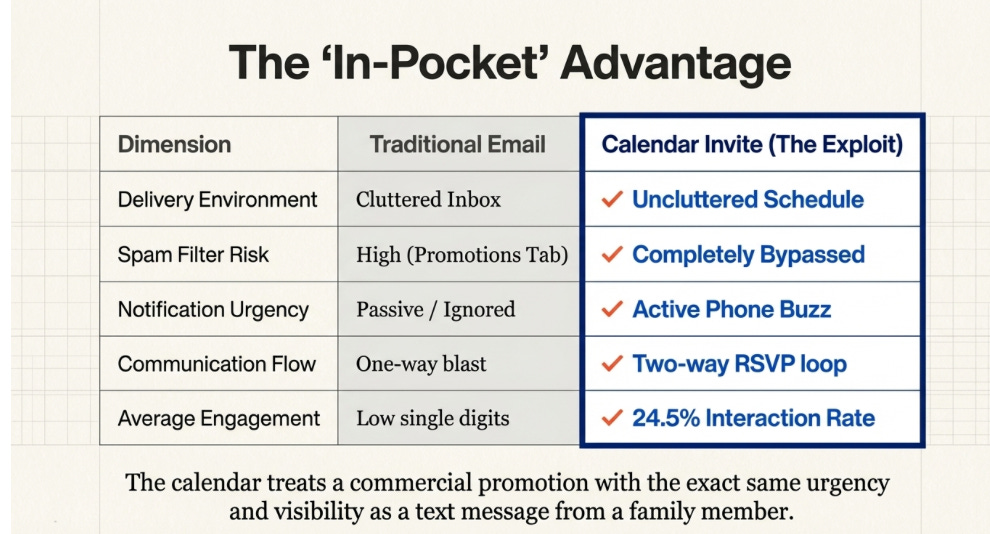
The data reveals a story of deep engagement: with 296,907 total invites sent and a global RSVP rate of 30.3%, the scale is undeniable. Furthermore, we can track “Number of updates”—a vital data point for understanding league volatility and fan patience.
We also track precisely where the engagement originated, whether it was a Mailchimp campaign (24.4% of invites), Klaviyo (15.7%), or a direct API call from schedule pages (30.3%).
Conclusion: The Future of Attendance
The inbox has become a noisy, cluttered battleground where messages go to die. The calendar, however, remains deployed across 1 billion users a day—it is the one place where users actively manage their most precious resource: time.
By automating the distribution of 2,400 games, the MLB 2026 project proves that “owning the slot” is the new frontier for brand loyalty.
This technology isn’t limited to sports; it’s the future for concert tours, academic schedules, and recurring corporate events. The inbox is where the conversation starts, but the calendar is where the action—and the attendance—actually happens.
Contact me if you want the Cloud Formation template for the Calendar Invite Server.